What We Thought We Knew
For as long as most of us can remember, we've been told that the secret to a healthy relationship is communication. When a couple begins drifting apart, they're encouraged to communicate more. When someone feels misunderstood, they're told to communicate more clearly. After an argument, the advice is almost always the same: "You just need to communicate." Somewhere along the way, communication stopped being a skill and became the universal solution to nearly every relationship problem imaginable.
The message is everywhere. Marriage counselors emphasize it. Relationship experts repeat it. Friends offer it after breakups, and social media has turned it into endless reminders about expressing your feelings, setting boundaries, and finding the right words. The underlying assumption is simple: if two people could just learn to say the right things in the right way, their relationship would naturally become healthier.
It sounds reasonable.
The only problem is that it doesn't explain reality.
If communication alone was enough, brilliant communicators would have extraordinary relationships. Lawyers would have the happiest marriages. Therapists would never struggle with intimacy. Executives who negotiate billion-dollar deals would effortlessly navigate conflict at home, and public speakers—people whose careers depend on moving audiences with words—would rarely experience divorce. Yet every day, they do. The ability to communicate effectively has never guaranteed the ability to create closeness.
Think about the people you've met throughout your life. Some could hold a conversation with anyone. They were articulate, confident, quick-witted, and always seemed to know exactly what to say. Yet something about being around them still felt distant. You left those conversations informed but not moved, heard but not understood, impressed but not connected.
Then there are people who seem to have the opposite effect. They stumble over their words. They pause to think. They aren't especially charismatic, and sometimes they say exactly the wrong thing. Yet five minutes with them somehow leaves you feeling calmer, safer, and more alive. Long after you've forgotten the conversation itself, you still remember what it felt like to be with them.
That difference changes everything.
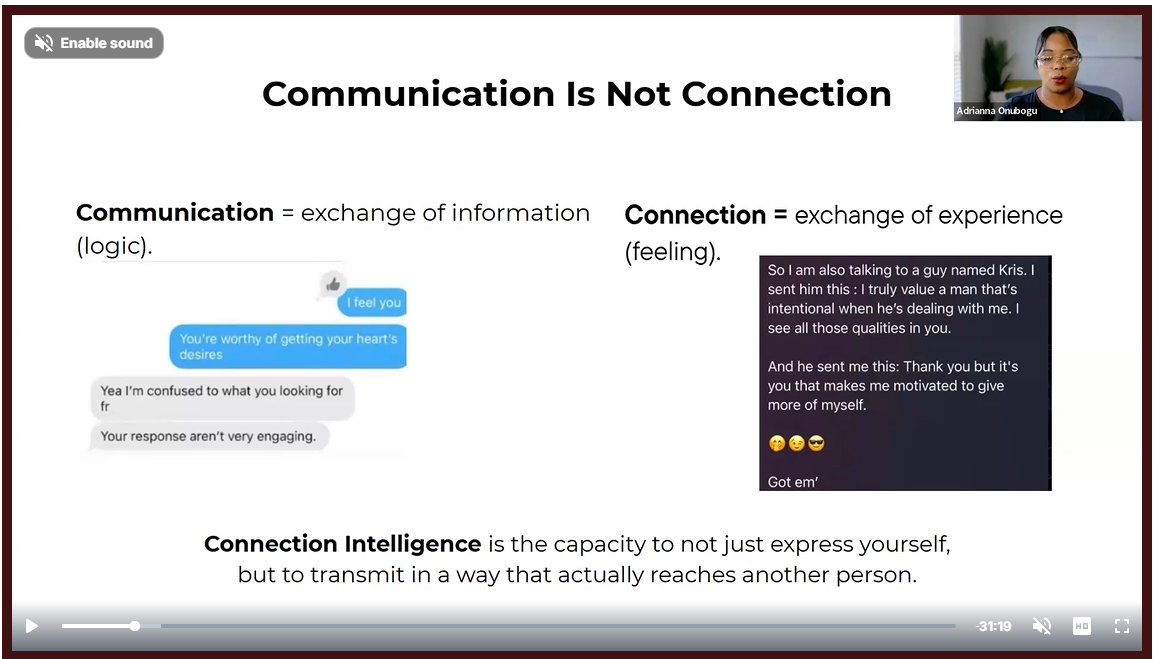
If two people can possess equally strong communication skills while creating completely different emotional experiences, then communication cannot be the thing creating connection. It may strengthen connection. It may repair connection. It may even help sustain connection. But it isn't connection itself.
Somewhere along the way, we confused the vehicle with the destination. Communication became the goal when it was never meant to be anything more than one of the tools we use to reach it. As a result, millions of people have spent years trying to solve the wrong problem. We've become obsessed with finding the perfect words, sending the perfect text, setting the perfect boundary, and explaining ourselves more clearly, believing that if we could only communicate well enough, closeness would naturally follow.
Meanwhile, we've asked surprisingly little about something far more important.
What is it actually like to experience me?
That question has the power to explain things communication never could. It explains why someone can enjoy talking to you and still never feel emotionally close to you. Why someone can agree with everything you say and still slowly lose attraction. Why first dates that check every logical box somehow never become second dates, and why marriages slowly become partnerships of routine despite years of conversation. These aren't communication problems. They're something else entirely.
For decades, we've tried to become better communicators because we believed communication was the destination. I don't believe it is. I believe we've been searching for something much deeper—something communication was never designed to create on its own. We haven't had a communication problem.
We've had a connection problem.
And the moment you understand the difference, you'll never look at relationships the same way again.